
The exokiss journal · skincare · 5 min read
What do ceramides do in a ceramide cream?
By the exokiss team ·
In short
- Ceramides are lipids (fats) your skin already makes. They sit between the cells of the outer layer and help it hold on to water.
- A ceramide cream adds ceramides back in a moisturizer, usually with humectants and butters, so dry skin feels soft and supple.
- Use it as the last step, on slightly damp skin or over a hydrating serum.
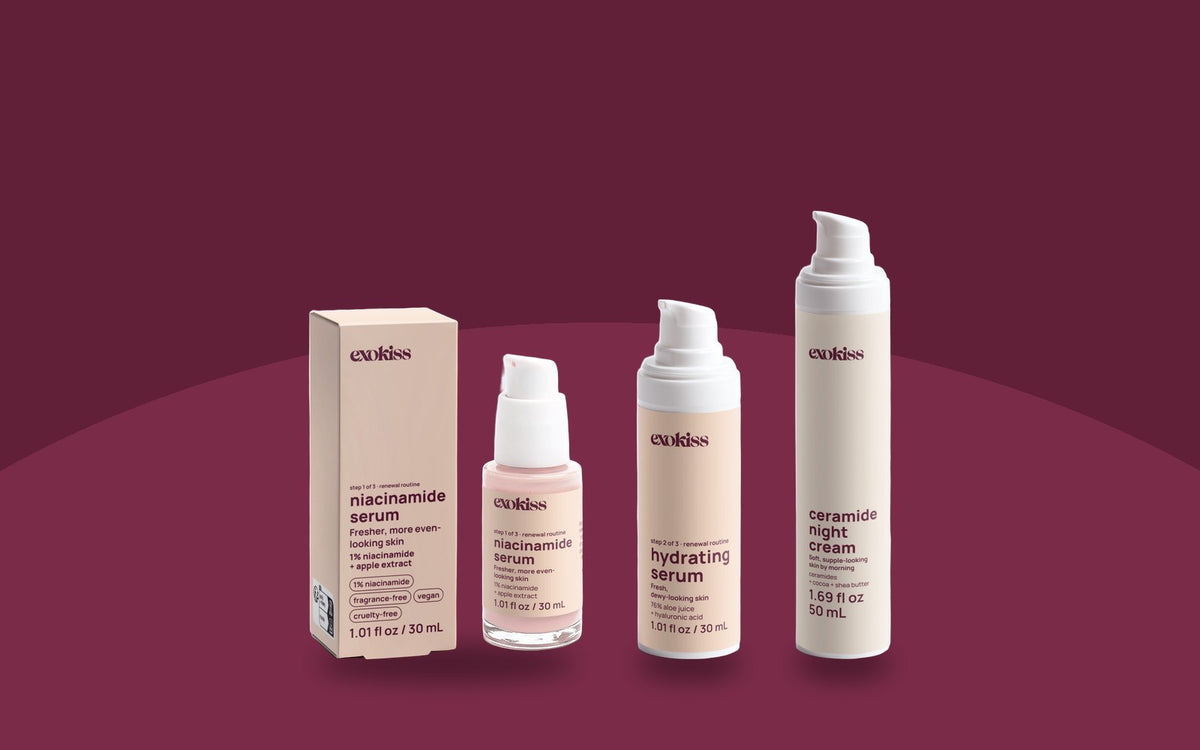
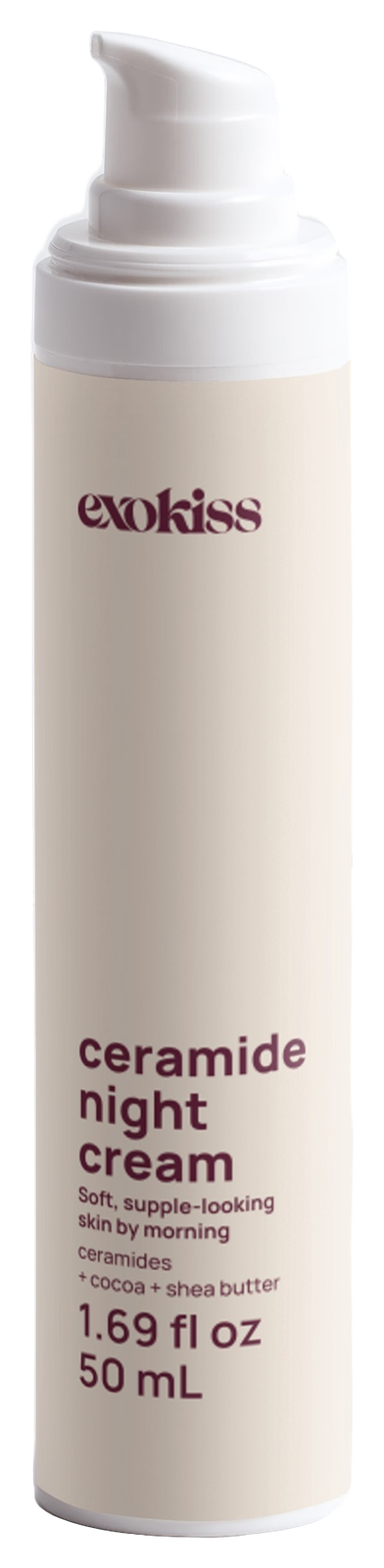
- Our Ceramide Night Cream has 0.2% ceramides in a cocoa-and-shea base. It is scented, and made for normal to dry skin.
A ceramide cream is a moisturizer built around an ingredient your skin already knows. This guide explains what ceramides are, what they do inside a cream, how to find them on a label, and how to layer a ceramide cream with serums. If you are comparing night creams in general, start with what to look for in a night cream for dry skin, then browse our face moisturizers.
What ceramides are
The outer layer of your skin is made of flat cells with thin sheets of lipids between them. A review in the American Journal of Clinical Dermatology describes ceramides as "the major lipid constituent" of those sheets. The other two main lipids are cholesterol and free fatty acids, and the three are present in roughly equal amounts.
Together they form an ordered, tightly packed structure. The review calls the role of ceramides in maintaining the skin's water barrier "essential". In plain words: they help keep water in.
Your skin makes its own ceramides, but not at a constant rate. As Cleveland Clinic puts it, "As you age, your skin can't replenish its natural ceramides as quickly as it did when you were younger."
What ceramides do in a cream
The ceramides in skincare are made to match the kind found in skin. Cleveland Clinic notes that human-made ceramides are the ones commonly used in skincare products.
In a cream they do not work alone. A moisturizer pairs them with humectants, which draw in water, and with butters or oils, which soften and slow water loss. The ceramides add the skin's own kind of lipid to that mix. The result you notice is simple: skin feels smoother, softer and less tight.
What a cosmetic ceramide cream is not: a medicine. Research links several skin conditions with lower ceramide levels, but that is a matter for a dermatologist, not a moisturizer label.
How to find ceramides on a label
Ceramides do not always appear under that name. Look for:
- "Ceramide" followed by letters or a number, such as ceramide NP, AP or EOP.
- Glycosphingolipids. This is the name on our own ingredient list.
- A percentage, if the brand prints one. Most don't.
In our Ceramide Night Cream, the ceramides are listed as glycosphingolipids, at 0.2%. Is that enough? We print the real figure so you can judge. The ceramides work with organic cocoa and shea butters, aloe leaf juice, jojoba and sunflower oils, sodium PCA and hyaluronic acid, and the whole cream is designed to leave skin feeling soft and supple.
Our Ceramide Night Cream, in detail
It is a rich, creamy night cream that leaves a soft, cushioned layer to sleep in. Aloe leaf juice is the first ingredient, followed by cocoa seed butter and jojoba oil. It is vegan, with plant waxes in place of beeswax, COSMOS Natural certified by Ecocert Greenlife, 99% natural origin and 27% organic, at pH 5.0–5.3. The pump bottle holds 1.69 fl oz (50 mL).
Who it is for: normal to dry skin, at night. Who it is not for: if your skin is oily, it may feel richer than you want. And it is scented, with white flowers and lavender from fragrance and essential oils, so it is not the pick if you avoid fragrance. Our Fragrance-Free Moisturizer has no fragrance and no essential oils, though it is not a ceramide cream.
How to use a ceramide cream
- Cleanse, then leave skin slightly damp.
- Apply water-light layers first: toner, then serum.
- Warm a small amount of cream between your fingertips.
- Massage over face and neck until absorbed. This is the last step.
- Don't wait. Moisturizers absorb best on damp skin. Cleveland Clinic suggests applying within three minutes of washing your face.
Our cream is made for the evening. Its directions say to apply it at night as the last step of your routine.
What to layer under a ceramide cream
A cream seals. What you put under it decides what gets sealed in. This is our three-step Renewal routine, in order:
| Step | Product | What is in it | Texture and scent |
|---|---|---|---|
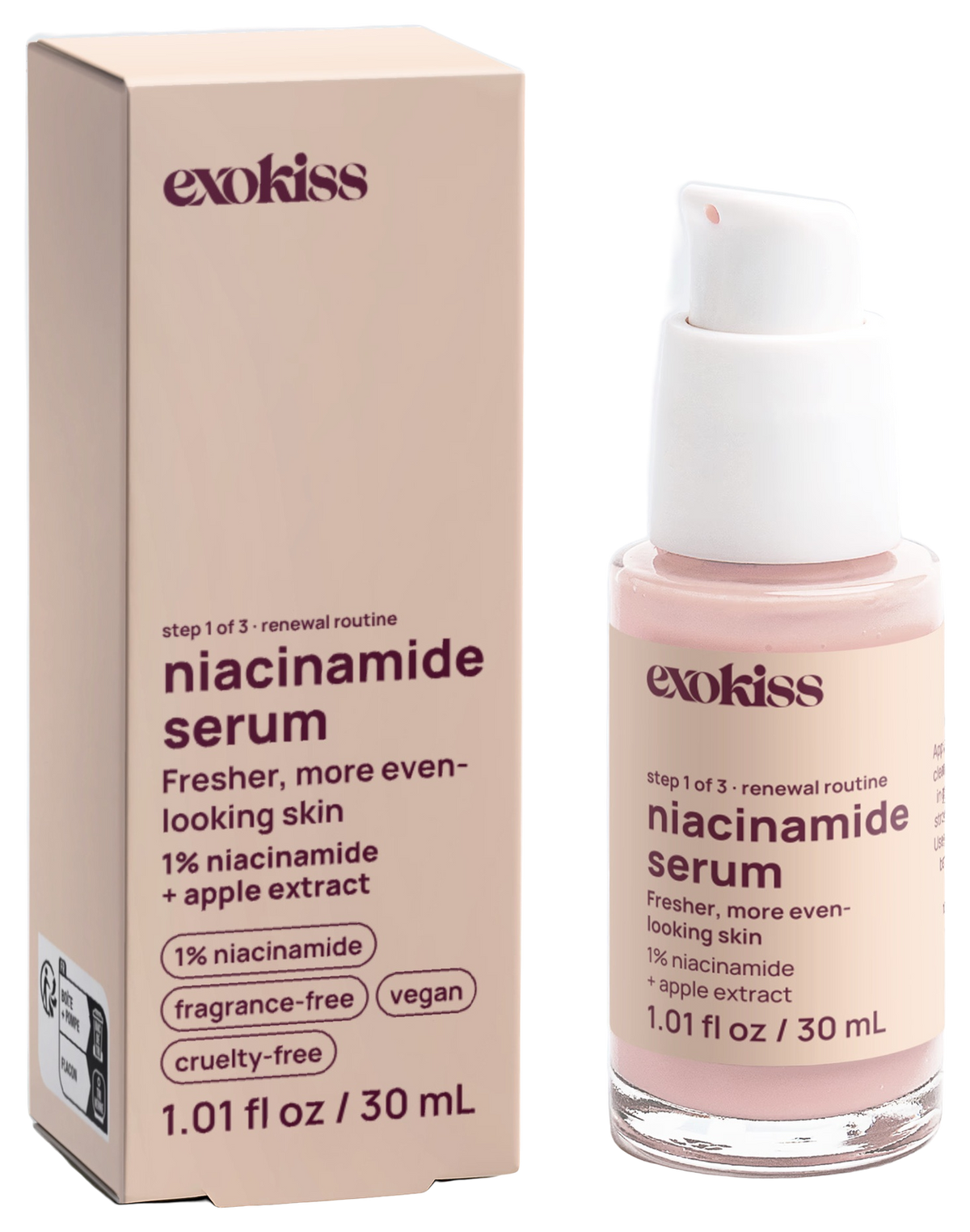
| 1 | Niacinamide Serum | 1% niacinamide, apple extract, hyaluronic acid | Creamy; no fragrance, no essential oils |
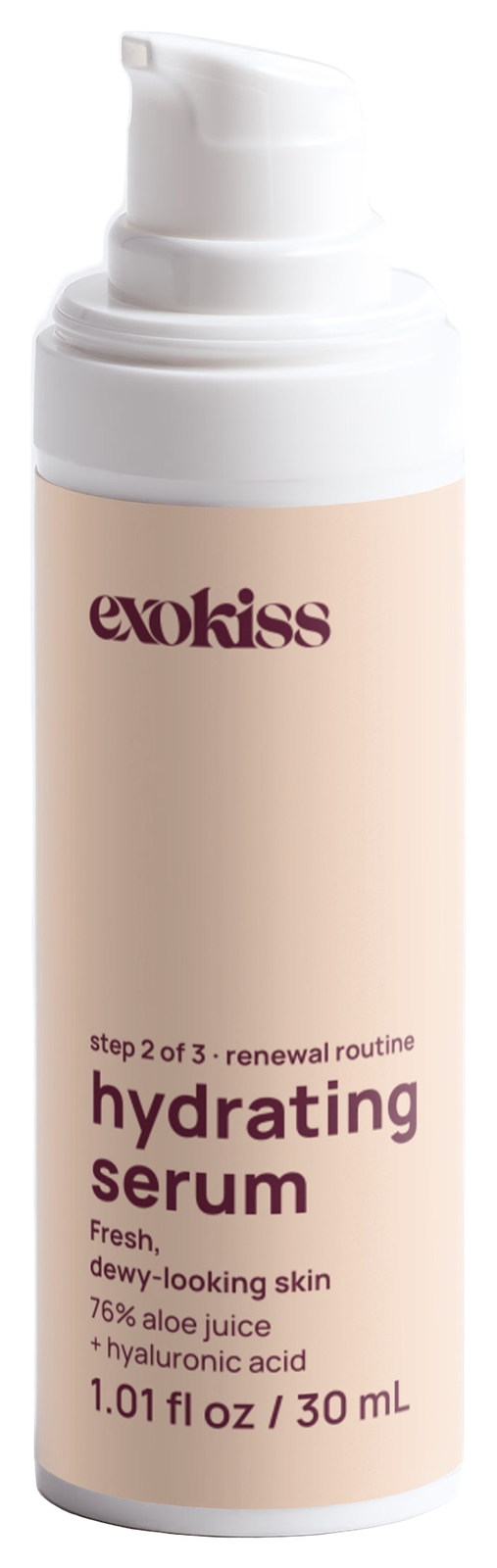
| 2 | Hydrating Serum | 75.74% aloe leaf juice, 3.9% jojoba oil, 0.1% hyaluronic acid | Light fluid; soft cotton-and-flowers scent |
| 3 | Ceramide Night Cream | 0.2% ceramides, cocoa and shea butters | Rich cream; white flowers and lavender |
The Niacinamide Serum goes on cleansed skin, for fresher, more even-looking skin. It works morning and night. See how to use a niacinamide serum.
The Hydrating Serum gives a fresh moisture boost. Press a few drops over slightly damp skin, then follow with the cream to seal in the hydration. That order is in its directions.
Using other serums? The same rule holds: thinnest first, cream last. Our skincare routine steps guide has the full order.
Are there side effects?
Ceramides themselves are rarely the problem. Medical News Today's review says topical ceramides are generally safe for most people and unlikely to cause side effects. It adds that other ingredients in a product can cause a reaction, and suggests a patch test.
That applies to ours too. The cream contains fragrance and essential oils. Test it on a small area first if your skin reacts easily.
Frequently asked questions
What is a ceramide-based moisturizer?
A moisturizer that includes ceramides, the lipids found between the cells of the skin's outer layer, alongside humectants and oils or butters. It is used to help dry skin feel soft and hold on to moisture.
Are ceramides good for under eyes?
Ceramides can be used in eye products, but check each product's directions. Our Ceramide Night Cream is directed for the face and neck. For the eye area we make a separate Peptide Eye Cream.
How can I get ceramides naturally?
Your skin makes them. It replenishes them more slowly with age, which is one reason people add a ceramide cream.
Can ceramides help with eczema?
Eczema is a medical condition, so ask a dermatologist what to use. Our Ceramide Night Cream is a cosmetic moisturizer for dry-feeling skin and is not made for any skin condition.
Is 0.2% ceramides enough?
It is the real figure in our cream, printed so you can compare. In our formula the ceramides sit in a base of cocoa and shea butters, plant oils and humectants.
Can I use a ceramide cream with niacinamide?
Yes. In our Renewal routine the Niacinamide Serum is step one and the Ceramide Night Cream is step three.
Sources
Coderch L., López O., de la Maza A., Parra J.L. Ceramides and skin function. American Journal of Clinical Dermatology, 2003;4(2):107–129.
Cleveland Clinic. What Are Ceramides? Health Essentials, 2025.
Medical News Today. Ceramides for skin: Benefits, side effects, and more.
Product details are taken from the exokiss product pages. This article is general information, not medical advice.
not sure yet?
try it first
2 mL samples of our best-sellers are $5 each, and one is free with orders of $65 or more. Free US shipping from $35.
keep reading
All articles-
 skincare · 5 min read
Gentle face wash for dry skin: what to look forWhat makes a face wash gentle enough for dry skin: mild cleansers, a skin-close pH and humectants. Plus how to wash so skin never feels tight.
-
 skincare · 6 min read
Fragrance-free vs unscented: what the label means in a moisturizerFragrance-free vs unscented are not the same. What each label means, what "no added fragrance" adds, and how to check a moisturizer's ingredient list.
-
 skincare · 5 min read
Vegan skincare: what "vegan" and "cruelty-free" mean on a labelVegan skincare has no animal-derived ingredients. Cruelty-free is about testing. How to read both on a label, and which exokiss products are vegan.

